Screen Readers, Captions, and Closed Doors: Auditing Your Virtual Expo for Accessibility Before You Register the Team

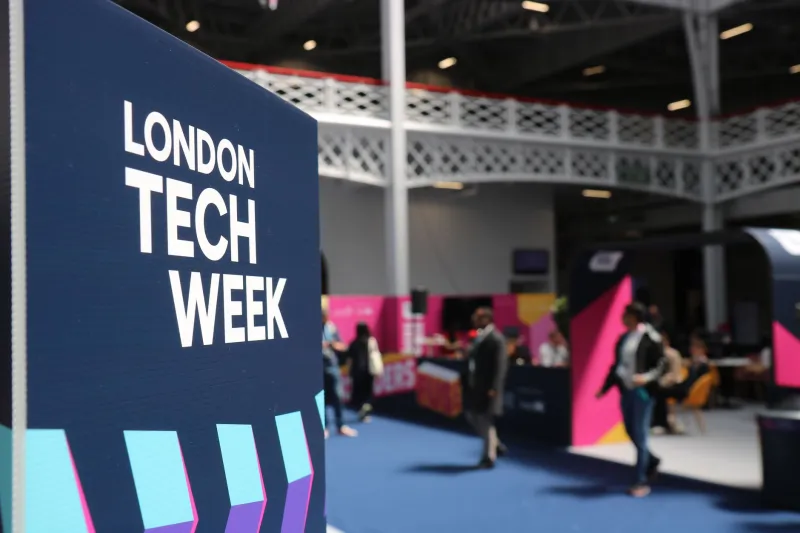
Photo by Photo by Justin Morgan on Unsplash on Unsplash
Most organizations approach expo registration the way they approach a hotel booking: confirm the dates, compare the price, and assume the room will have a door. Accessibility gets handled afterward, typically once an employee has already been left out of a session they were qualified to attend.
For HR teams, that order is reversed. A virtual expo is not accessible merely because it is virtual. Platform architecture, captioning workflows, vendor booth design, and even the shape of the agenda determine who can participate. The audit belongs before registration, while the contract is still open and the vendor is still listening.
The Legal Floor, in Brief
The Americans with Disabilities Act contains no line-item rule about webinar platforms, yet Title III obligations have been applied to digital properties through litigation and settlement for years. Federal agencies and their contractors operate under Section 508. Many private employers treat WCAG 2.2 Level AA as their working benchmark regardless of strict legal obligation, largely because it gives them something measurable to hold a vendor to. The Justice Department's 2024 rule under ADA Title II, which set WCAG 2.1 AA as the target for state and local government web content, signaled the direction of travel for everyone else. Layer on state statutes such as California's Unruh Civil Rights Act, and the compliance case becomes uncomplicated: the question is not whether accessibility is required, but whether anyone verified it before the seats were purchased.
Start With the Platform, Not the Program
Registration pages tend to lead with keynote names and session counts. Ask instead for the accessibility conformance report, usually delivered as a VPAT or ACR. Read it with appropriate skepticism. A conformance report is a self-assessment, and a vendor's own grade is not the same as independent testing.
Follow up with three questions that a report will not answer:
- Which screen readers were used in the most recent test, and on what date?
- Can every function be completed by keyboard alone, including registration, session entry, and booth chat?
- What happens when a third-party vendor's content inside the hall does not meet the platform's own standard?
That last question matters more than it appears. Many virtual expo platforms pass their own audit while hosting exhibitor content that fails badly.
Captions, Transcripts, and the Difference Between Them
Automatic captions have improved considerably and are still not equivalent to a human captioner, particularly for the acronym-dense vocabulary of benefits, payroll, and compliance. Ask whether live sessions use CART captioning or automated speech recognition, and ask for a sample. Then ask the question that rarely appears on a vendor FAQ: are the recordings captioned too?
An employee who needs captions is not served by a live-only solution. Many attendees rely on transcripts to review material at their own pace, and some process written text far more reliably than audio. Interpretation requests deserve the same scrutiny. Sign language interpretation is typically arranged on a two-to-four-week lead time, so a platform that accepts accommodation requests seven days out is effectively offering a service it cannot deliver.
The Vendor Booth Blind Spot
Conference organizers control the platform. They do not control the exhibitors. Walk through a virtual hall with accessibility in mind and patterns emerge quickly: demonstration videos with no captions, product PDFs with no alt text, live chat as the only contact route, and gamified booth activities that require a webcam.
HR can influence this. Include an accessibility clause in exhibitor agreements, or at minimum ask the organizer whether one exists. A booth that cannot be used by a screen reader user is a booth that excluded a buyer, and organizers respond to that framing.
Cognitive Load: The Exclusion Nobody Audits
Disability is broader than the categories that appear on accommodation forms. Employees managing attention deficits, traumatic brain injury, chronic pain, autism, or post-viral fatigue are often excluded not by a broken button but by an agenda that runs eight consecutive hours with no breaks, autoplay video, flashing notification banners, and no advance view of the schedule.
Three inexpensive fixes cover most of this ground. Publish the full agenda at least a week ahead so attendees can plan. Build real breaks between sessions rather than five-minute transitions. Keep recordings and transcripts available long enough that nobody has to absorb everything in real time.
A Pre-Expo Checklist for HR
- Request the conformance report and the date of last independent testing.
- Confirm whether captions are human-provided or automated, and whether recordings carry them.
- Publish an accommodation request deadline and the exact channel for submitting one.
- Route requests through a confidential contact, not through an employee's direct manager.
- Ask how the platform handles requests submitted after the published deadline.
- Schedule a 30-minute login test with each employee's own assistive technology, 48 hours before the event.
- Identify one named point of contact who can solve problems on the day itself.
- Put recordings, transcripts, and retention windows into the contract, not into a verbal promise.
The audit is not primarily a compliance exercise. It is a talent exercise. An expo seat that only some employees can use is a development budget that only some employees receive, and the employees most likely to notice are frequently the ones the organization can least afford to lose.