The Free Regulatory Briefing Hiding in the Expo Hall: Compliance Questions for 2025
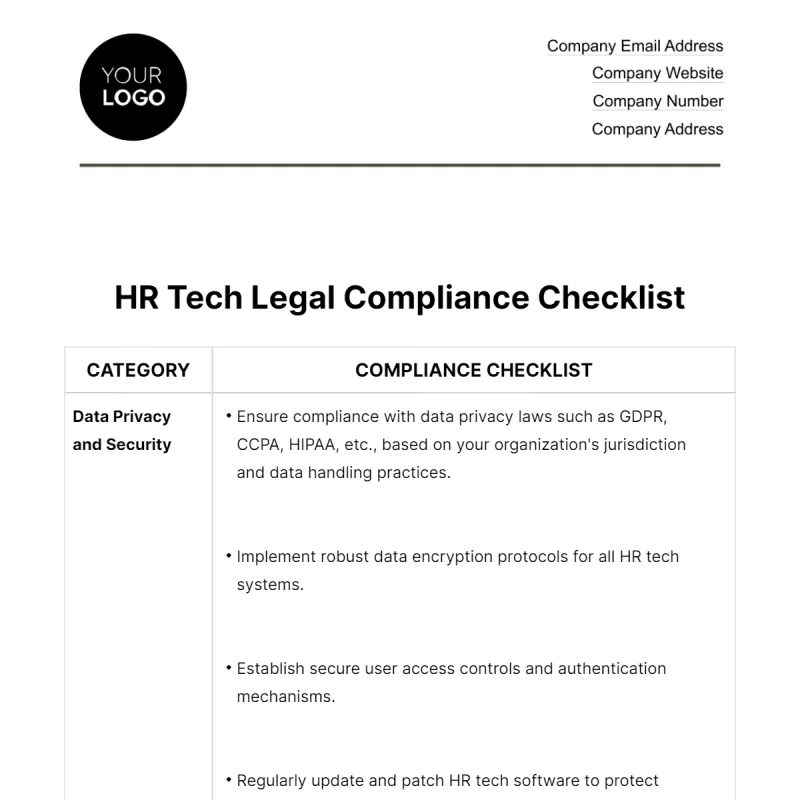
Photo: human resources professional laptop compliance documents legal checklist, via images.template.net
Every HR professional operating across state lines knows the feeling: the compliance landscape shifted again, and your policies have not. Paid counsel is essential, but it is not always accessible at the moment a question arises. What many attendees miss is that virtual expos have become one of the most efficient free sources of regulatory intelligence available — if you know which questions to ask.
Vendors selling benefits administration, payroll, and HR technology employ compliance specialists whose entire job is tracking state and federal regulatory change. At a booth, that expertise is sitting across the chat window, unbillable, waiting to be queried. The trick is asking questions specific enough to reveal whether a vendor genuinely understands the terrain or is reciting marketing copy.
High-Risk Territory: Multistate Leave and Accommodation
The patchwork of state and local leave laws remains the top compliance exposure for growing employers. Paid family and medical leave programs now operate in over a dozen states, with more phasing in, and the rules on contribution rates, job protection, and covered relationships vary enough to trip up even careful teams.
Ask vendors:
- How does your platform handle an employee who works in one state but resides in another for leave eligibility?
- Which state paid leave programs do you support natively versus through manual configuration?
- How quickly do you update contribution rates when a state program changes mid-year?
- What is your process for tracking intermittent leave across jurisdictions with different certification rules?
If a vendor's answer to the first question is a shrug, keep walking.
High-Risk Territory: AI in Hiring and Screening
Regulation of automated employment decision tools is accelerating. Illinois has long required disclosure of AI in video interviews; New York City's Local Law 144 mandates bias audits and candidate notification; Colorado's AI Act introduces broader duties around consequential decisions; and the EEOC has signaled continued scrutiny of algorithmic screening under existing civil rights law.
Ask vendors:
- Does your product make or materially influence employment decisions, and can you document where a human reviewer intervenes?
- Have you completed an independent bias audit, and will you share the summary results?
- What candidate-facing disclosures and adverse impact data can your system produce on demand?
- How do you handle state-specific notification requirements, and which states are on your compliance roadmap?
A vendor who cannot answer the bias audit question with specifics is telling you something important.
Medium-Risk Territory: Pay Transparency and Wage Compliance
Pay transparency requirements have swept through states including California, Colorado, New York, Washington, and Illinois, with thresholds and scope varying widely. Meanwhile, federal overtime thresholds and state-level wage statement rules keep shifting.
Ask vendors:
- Can your compensation module flag job postings that fall short of a given state's disclosure requirements?
- How do you handle salary range documentation for remote employees whose pay may be set in one state and worked in another?
- What audit trail exists for wage statement corrections?
Foundational Questions Worth Asking Every Vendor
Regardless of product category, three questions separate the compliance-serious from the rest:
- Who owns regulatory monitoring internally, and how do updates reach customers? Look for a named function, not a blog post.
- What is your average time from a law's effective date to platform support? Vague answers here predict painful gaps later.
- Will you provide regulatory update communications in writing, with sources? Documentation you can hand to counsel is worth real money.
Turning Booth Chats Into Institutional Knowledge
The final step is capture. Take notes during vendor conversations with the same rigor you would apply to a deposition: vendor name, date, representative, and the specific answers given. After the expo, circulate a summary to leadership and, where answers surface genuine legal exposure, route the question to employment counsel for confirmation.
A virtual expo will never replace qualified legal advice. But as a first-pass radar for what is coming and which partners can help you handle it, the expo hall remains the best free regulatory briefing in the profession. In 2025, showing up without questions is the only real compliance risk you can control.